

Difference in Premium Cigars & Gas Station Cigars
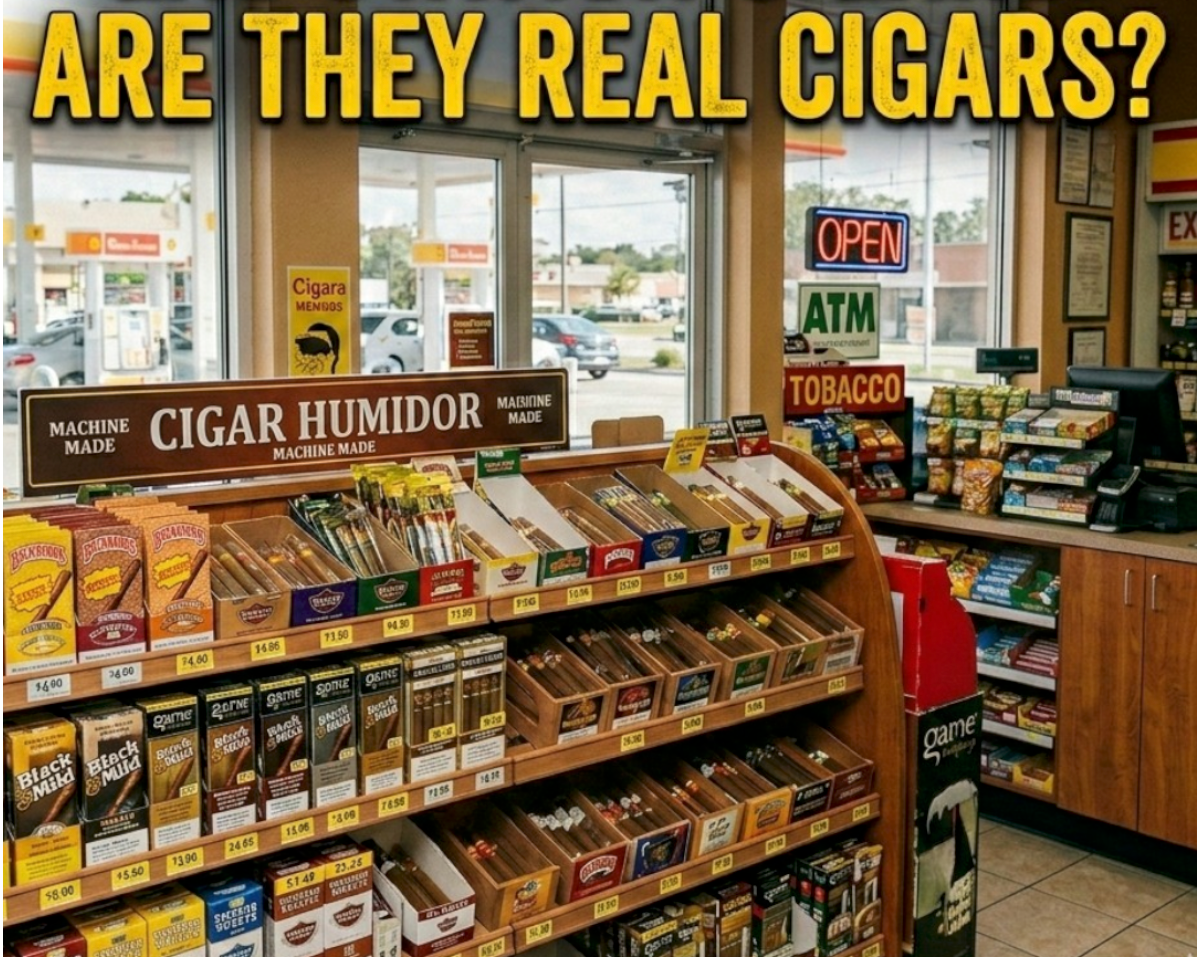
You’re standing at a gas station counter at 11 PM. There’s a rack of cigars right next to the beef jerky. You grab one, light it up in the parking lot, and wonder: did I just smoke a real cigar?
It’s a question more people ask than you’d think — and the answer is more complicated than a simple yes or no.
What Makes a Cigar a “Real” Cigar?
Before we judge the gas station rack, we need to establish what a cigar actually is. At its most basic, a cigar is a rolled bundle of fermented tobacco leaves. That definition, technically, includes everything from a hand-rolled Nicaraguan puro to a convenience store cigarillo.
But in the world of premium tobacco, “real cigar” usually means something more specific. All-tobacco construction with no paper or reconstituted tobacco sheets. Long filler — whole tobacco leaves running the length of the cigar, not chopped scraps. A natural tobacco binder and wrapper, ideally whole leaf. And proper fermentation and aging — tobacco that has gone through the ammonia-releasing process that develops flavor and reduces harshness.
Most gas station cigars don’t tick all of those boxes. Some don’t tick any of them. But that doesn’t mean the conversation ends there.
The Gas Station Cigar Breakdown: What’s Actually Inside
Walk into any convenience store and you’ll find a few distinct categories sharing that same wire rack.
Machine-Made Cigars With HTL Binders
The bulk of the gas station market is dominated by machine-made cigars using short-filler tobacco — chopped tobacco scraps rather than whole leaves — held together with a homogenized tobacco leaf (HTL) binder. HTL is essentially reconstituted tobacco: dust and pulp pressed into a uniform sheet, similar to how paper is made.
The wrapper is often natural tobacco leaf, or a tobacco-paper blend, depending on the product. These cigars burn fast, taste sweet (many are infused with flavors like vanilla, wine, or honey), and cost under $2. They are mass-produced at enormous scale.
Are they real cigars? Technically, yes — they contain tobacco and are wrapped in tobacco or tobacco-based materials. But they’re miles away from what a cigar enthusiast would call a premium cigar.
The Occasional Premium Outlier
Here’s where things get interesting. Some gas stations — particularly those near highways, airports, or in tobacco-friendly states — do carry a small selection of genuine premium cigars in glass humidor cases behind the register.
These are real cigars: long filler, natural binder, natural wrapper, hand-rolled and properly fermented. But finding one doesn’t mean you’re getting it in good condition.
Storage: The Factor That Changes Everything
Cigars are a living product. They need to be kept at 65–70% relative humidity and a stable temperature to stay in good condition. When humidity drops too low, the wrapper loses its oils, the filler dries out, and the draw tightens up — the cigar becomes harsh and one-note, a fraction of what it was meant to be.
Most gas stations don’t maintain a humidor at all — the wire rack cigars sit in open air, which is fine for HTL machine-made products that are built to tolerate humidity swings. But some gas stations, particularly those near highways or in states with a strong cigar culture, do make the effort. A properly maintained glass humidor case with a calibrated humidification system can absolutely keep premium cigars in good shape.
The honest reality is: it varies. Some gas station humidors are well-kept and regularly restocked. Others are set-and-forget setups that slowly dry out over months. If you’re considering buying a premium cigar from a gas station, it’s worth asking when the stock was last rotated — or simply giving the cigar a gentle squeeze to feel whether it still has that slight give that indicates proper moisture.
For the best experience with premium cigars, a dedicated brick-and-mortar tobacconist is where storage is taken seriously. Walk-in humidors, knowledgeable staff, and properly aged inventory make a real difference in what ends up in your hand. If you’re not sure where to start, inquire within. Our staff is very knowledgeable and we’re happy to assist in your purchases.
Why the Difference Actually Matters
If you only ever want something to light up while mowing the lawn or waiting for a friend, the gas station cigar does the job. But there are real reasons why premium cigar smokers draw a hard line.
The Smoke Experience
Long-filler premium cigars produce a fundamentally different smoking experience. The tobacco burns cooler and slower. The flavors develop in layers — you might start with cedar and cream, transition through baking spice, and finish with dark chocolate and leather. That complexity comes from the construction, the fermentation, the aging, and the blend working together.
Gas station cigars burn hotter and faster, often produce more acrid smoke, and tend to taste one-dimensional — sweet at first, then sharp and bitter toward the end.
What You’re Actually Inhaling
Properly fermented long-leaf tobacco has had ammonia and other harsh compounds driven out during the fermentation process. The smoke is still tobacco smoke — with all the health implications that come with it — but it’s smoother and less chemically aggressive than short-filler or HTL-heavy construction.
Premium cigars are also not meant to be inhaled. The slow-burning, complex smoke is meant to be drawn into the mouth and tasted, then exhaled. Gas station cigars, particularly filtered varieties, are often partially inhaled by habitual smokers — which changes the risk profile considerably.
The Ritual
Part of what makes premium cigar smoking a ritual is the time investment. A quality robusto from a Honduran or Dominican factory takes 45 minutes to an hour to smoke properly. You’re cutting it, toasting the foot, taking your time with the first third. That ritual has social, cultural, and sensory dimensions that a 10-minute convenience store smoke can’t replicate.
So — Are They Real Cigars? The Final Verdict
Gas station cigars are real cigars in the legal and technical sense — they are wrapped tobacco products that meet the federal definition of a cigar, and they are taxed differently than cigarettes partly because of this classification.
They are not real cigars in the experiential sense that premium cigar enthusiasts mean. They lack long filler, proper fermentation, quality binders, and the construction precision that defines a hand-rolled premium stick.
They are their own category — and for many people, they serve their purpose just fine.
The real problem comes when someone smokes a gas station cigarillo, decides they don’t like cigars, and never tries the real thing. That’s like drinking instant coffee, deciding you hate coffee, and never having a proper espresso.
If You Want to Try a Real Cigar
If you’ve been living in gas station cigar territory and want to understand what the fuss is about, here’s where to start.
Start mild. A Connecticut-wrapped cigar — the pale, tan-colored wrapper — will be the most approachable. Expect creamy, smooth flavors and light strength. It’s the most forgiving entry point for a new palate.
Buy from a proper shop. Find a local tobacconist with a walk-in humidor. The cigars there are stored correctly, and the staff can guide you toward something that matches your taste. You can also get a sense of what to expect by reading independent reviews at The Velvet Leaf before you spend a dollar.
Don’t start with a big ring gauge. A robusto (5 x 50) or corona (5.5 x 42) is a better entry point than a thick 60-ring cigar. Smaller ring gauges tend to burn better and deliver more concentrated flavor for newer smokers.
Cut properly. Use a straight or V-cut on the cap — the closed end you put in your mouth. Slice cleanly just above the shoulder where the cap meets the body. Don’t bite it.
Toast the foot. Hold the flame near (not touching) the open end and rotate the cigar slowly before your first draw. This ensures an even light and a cleaner first third.